Your body is replacing about 3.8 million cells per second as you read this sentence. By the time you finish this paragraph, you'll be measurably different from the person who started it. Old red blood cells are being dismantled in your spleen. New ones are being assembled in your bone marrow. The lining of your small intestine is shedding and regrowing every three to five days. Your skin is a month old, tops. That's biology. Not a subject you study. A process you are.
Biology is the only science where the subject matter can get up and walk away from you. Or eat you. Or quietly evolve resistance to your best antibiotic and become a global health crisis. It's the science of living things, which sounds simple until you try to define "living." Viruses reproduce but don't metabolize. Prions spread but have no DNA. Fire consumes fuel, grows, and responds to its environment. The line between alive and not alive is blurrier than any textbook admits, and that blurriness is part of what makes biology so genuinely strange.
What follows is a map of the territory. Eleven topics that cover the major branches of biology, from the molecular machinery inside a single cell to the global systems that keep entire ecosystems running. Each one connects to the others in ways that are not always obvious. Genetics feeds into evolution. Evolution shapes ecology. Ecology depends on microbiology. Your immune system is a product of all four. Biology is not a list of facts to memorize. It's an interconnected web, and pulling on any thread moves the whole thing.
Cells: The Smallest Thing That's Alive
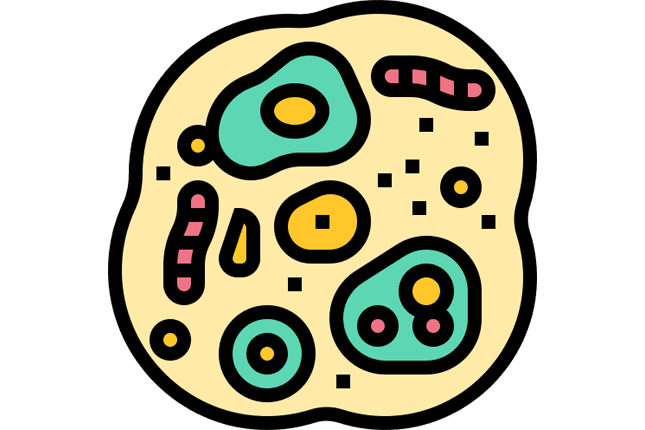
Everything alive is made of cells. You are roughly 37.2 trillion of them, each one doing its own work, each one a self-contained unit with its own membrane, its own energy production, its own copy of your DNA. Robert Hooke coined the term "cell" in 1665 when he looked at cork under a microscope and saw tiny compartments that reminded him of monks' rooms. He was looking at dead plant cell walls. The living contents had long since dried out. But the name stuck.
The real action inside a cell makes a factory look simple. Ribosomes read messenger RNA and assemble proteins, one amino acid at a time, at a rate of about 20 per second. Mitochondria run a proton gradient across their inner membrane to generate ATP, the molecule every cell uses as energy currency. The endoplasmic reticulum folds newly made proteins into three-dimensional shapes so precise that a single misfolded protein can cause disease. Lysosomes break down worn-out components for recycling. And all of this happens in a space measured in micrometers.
Cell biology is where everything starts. You can't understand cancer without understanding cell division gone wrong. You can't understand antibiotics without understanding how bacterial cell walls differ from your own. You can't understand why a brain cell looks and acts completely different from a muscle cell when they carry identical DNA. The answer to that last question (differential gene expression) is one of the most important ideas in all of biology, and it connects cells directly to genetics.
DNA and Genetics: The Code That Builds Everything
Here's something that should bother you: every cell in your body carries the same DNA. The same genome. Your liver cells have the instructions for building neurons. Your skin cells carry the blueprint for bone. The difference between a heart cell and a white blood cell is not what genes they have, but which genes they turn on. Genetics is not just about inheritance. It's about regulation.
DNA itself is almost absurdly simple in structure. Four chemical bases (adenine, thymine, guanine, cytosine) arranged in pairs along a double helix. That's the entire alphabet. Four letters, and from those four letters, the genome spells out instructions for building and running every living thing on Earth, from a bacterium with 500 genes to a human with roughly 20,000. The human genome contains about 3.2 billion base pairs. If you printed it out as text, it would fill about 175 books the size of a phone book. And roughly 98% of it doesn't code for proteins at all. Some of it regulates gene expression. Some of it is leftover from ancient viral infections. Some of it, we're still figuring out.
Genetics touches everything. Mendelian inheritance explains why you might have your grandmother's eye color. Molecular genetics explains how a single nucleotide change can cause sickle cell disease. Epigenetics, the study of changes in gene expression that don't alter the DNA sequence itself, is revealing how your experiences can influence which genes your children express. A famine your grandparents survived might affect your metabolism today. That's not Lamarckism. It's real, documented, and genuinely unsettling.
Humans share about 98.5% of their DNA with chimpanzees. That sounds like genetics is saying we're almost identical to chimps, but think about what 1.5% of 3.2 billion means: roughly 48 million base pair differences. Enough to produce completely different brain architectures, vocal anatomy, and developmental timelines. Percentage similarity is misleading because it ignores where the differences fall. A 1% change in a regulatory gene that controls brain development has far more impact than a 10% change in a gene that affects toe hair thickness. Context matters more than percentages.
Evolution: The Most Powerful Idea in Biology
Nothing in biology makes sense except in the light of evolution. That's not a slogan. It's a statement of fact first articulated by geneticist Theodosius Dobzhansky in 1973, and every year of subsequent research has only strengthened it. Evolution is the framework that connects every other branch of biology into a coherent story.
The mechanism is straightforward. Organisms vary. Some variations are heritable. Some heritable variations affect survival and reproduction. Over generations, the variations that improve survival and reproduction become more common in the population. That's natural selection. Darwin figured out the logic in the 1850s without knowing anything about DNA or genes. When Mendel's genetics was rediscovered and eventually merged with Darwin's theory in the 1930s and 40s (the Modern Synthesis), biology finally had a unified framework.
What most people get wrong about evolution: it is not about "survival of the fittest" in the popular sense. Fitness in biology means reproductive success, not strength or speed. A parasite that makes its host sneeze more (spreading itself further) is "fitter" than one that kills its host quickly. Evolution doesn't plan. It doesn't progress toward complexity. It has no direction. Bacteria are not "less evolved" than humans. They've been evolving for exactly as long as we have. They're just extremely good at being bacteria.
Simple single-celled organisms appear. For the next 2 billion years, all life on Earth is microbial.
Cyanobacteria flood the atmosphere with oxygen. This is a catastrophe for most existing life but opens the door for oxygen-breathing organisms.
Most major animal body plans appear in a 25-million-year burst. Still not fully explained.
Darwin publishes his theory of natural selection. Biology gets its unifying framework.
Watson and Crick (building on Rosalind Franklin's X-ray data) reveal the double helix. The mechanism of inheritance becomes physical.
The full human genome is sequenced. Cost: $2.7 billion. Today the same sequencing costs under $200.
Doudna and Charpentier publish the paper that turns a bacterial immune system into a gene-editing tool. Biology becomes writable.
Evolution also explains things that seem poorly designed. The human eye's retina is installed backwards, with the wiring in front of the photoreceptors (cephalopod eyes don't have this problem). The recurrent laryngeal nerve in giraffes travels from the brain down the entire neck, loops around the aorta near the heart, and runs back up the neck to the larynx, a detour of several meters that makes zero sense as engineering but perfect sense as evolutionary history. Biology is full of these "good enough" solutions, and evolution is the only reason they exist.
Ecology: How Life Fits Together
A single wolf changes the course of a river. That's not a metaphor. When wolves were reintroduced to Yellowstone National Park in 1995, they hunted elk. Elk stopped lingering in valleys and near riverbanks. Vegetation recovered. Tree roots stabilized riverbanks. Rivers narrowed, deepened, and changed course. This is a trophic cascade, and it illustrates the central insight of ecology: organisms do not exist in isolation. Everything is connected to everything else.
Ecology operates at every scale. Population ecology studies how individual species grow, shrink, and regulate their numbers. Community ecology studies how different species interact: competition, predation, mutualism, parasitism. Ecosystem ecology studies energy flow and nutrient cycling through entire systems. And biogeography (where ecology meets geography) asks why certain organisms live where they do and not somewhere else.
Biodiversity is not a feel-good buzzword. It's a measure of ecosystem resilience. Diverse ecosystems recover from disturbances faster than monocultures. They provide more stable yields of the things humans depend on: clean water, pollination, soil fertility, disease regulation. The current extinction rate is estimated at 100 to 1,000 times the natural background rate. That's not an environmental slogan. It's a data point, and it has direct consequences for agriculture, medicine (many drugs originate from natural compounds), and the stability of the systems that provide your food and oxygen.
Cells, molecules, genes, proteins. Measured in nanometers to micrometers. Tools: microscopes, PCR, gel electrophoresis, gene sequencing. Questions: How does a ribosome read mRNA? What makes a cell cancerous? How does a virus hijack cellular machinery? This is the domain of cell biology, genetics, microbiology, and molecular biology.
Organisms, populations, ecosystems, biomes. Measured in meters to thousands of kilometers. Tools: field surveys, satellite imagery, population modeling, mark-recapture studies. Questions: Why are coral reefs dying? How do invasive species reshape ecosystems? What drives migration patterns? This is the domain of ecology, evolution, conservation biology, and biogeography.
Human Biology: The System You Live Inside
You are a collection of organ systems so well-integrated that you forget they're there until something breaks. Your heart beats about 100,000 times per day, pushing blood through roughly 96,000 kilometers of blood vessels (enough to wrap around the Earth more than twice). Your kidneys filter about 180 liters of blood daily and return most of it to your body, producing only about 1.5 liters of urine. Your digestive system extracts nutrients from food using hydrochloric acid strong enough to dissolve metal, and it doesn't dissolve your stomach only because the stomach lining replaces itself every few days.
Human biology is where most people's relationship with biology gets personal. Understanding how your cardiovascular, respiratory, digestive, musculoskeletal, and nervous systems work isn't just academic. It's the foundation of every medical decision you'll ever make. Why exercise protects against heart disease (it strengthens the cardiac muscle and improves endothelial function). Why antibiotics don't work on viruses (completely different mechanisms of infection). Why sleep deprivation doesn't just make you tired (it impairs immune function, memory consolidation, and emotional regulation simultaneously).
The connection between human biology and chemistry is tight. Every drug you've ever taken works because of biochemistry. Aspirin inhibits cyclooxygenase enzymes, reducing prostaglandin production. Caffeine blocks adenosine receptors, preventing the signal that tells your brain you're tired. Understanding the chemical machinery of your body is what makes medicine possible, and it's what separates real medical knowledge from health influencer nonsense.
The Invisible Majority: Microbiology
By sheer numbers, you are more bacteria than human. The human body hosts roughly 38 trillion bacterial cells, slightly more than your 37.2 trillion human cells. Your gut microbiome alone contains about 1,000 different species of bacteria, and they're not just passengers. They synthesize vitamins your body can't make. They break down fiber you can't digest. They train your immune system. They produce neurotransmitters. Disrupting your gut microbiome (with antibiotics, for example) can affect your mood, your weight, and your susceptibility to infection.
Microbiology is the study of organisms too small to see without a microscope: bacteria, archaea, fungi, protists, and viruses (which sit on that blurry boundary between living and non-living). Microbes were the only life on Earth for about 2 billion years. They still dominate it. The total biomass of bacteria on Earth is estimated at around 70 billion tonnes of carbon. They live in boiling hot springs, frozen Antarctic ice, pressurized deep-ocean vents, and inside rocks kilometers underground. Life's default setting is microbial. Everything else is a relatively recent experiment.
The medical relevance is obvious: infectious disease. But microbiology is equally critical to agriculture (soil bacteria fix nitrogen for plants), industry (fermentation gives you bread, beer, yogurt, and biofuels), and environmental science (microbes drive the carbon and nitrogen cycles that regulate the atmosphere).
Plant Biology: The Organisms That Made Your Atmosphere
Every breath of oxygen you take exists because of photosynthesis. Plants (and before them, cyanobacteria) converted a reducing atmosphere of carbon dioxide and methane into the oxygen-rich air you're breathing right now. This took over a billion years and caused one of the largest mass extinctions in Earth's history (the Great Oxidation Event killed most anaerobic life). You owe your existence to organisms that have no brain, no nervous system, and no ability to move.
Plant biology covers how plants grow, reproduce, respond to light, transport water against gravity up to 100 meters (in the case of redwoods), and defend themselves against herbivores using an arsenal of chemical compounds. Many of those defense chemicals became human medicines. Aspirin comes from willow bark. Morphine comes from poppies. Taxol, a cancer drug, comes from Pacific yew trees. Plants can't run from their problems, so they solved them with chemistry.
Agriculture, the foundation of every civilization that has ever existed, is applied plant biology. Understanding how plants respond to nitrogen, phosphorus, light wavelengths, water stress, and pathogens is not abstract science. It's the knowledge that feeds 8 billion people. Climate change is a plant biology problem as much as it is a physics or policy problem, because shifting temperature and rainfall patterns directly affect where and how food can grow.
The Frontiers: Neuroscience, Immunology, Endocrinology, and Biotech
Some areas of biology are older than civilization (people have been breeding plants and animals for thousands of years). But several branches have exploded in recent decades, driven by new tools and new questions.
Neuroscience
Your brain contains roughly 86 billion neurons, each connected to thousands of others through an estimated 100 trillion synapses. It consumes about 20% of your body's energy while representing about 2% of your body weight. Neuroscience is the study of how this network of cells produces thought, memory, emotion, consciousness, and behavior. It's arguably the hardest problem in all of science, because the instrument you're using to study the brain is a brain.
Neuroscience has already delivered practical results: treatments for Parkinson's (deep brain stimulation), understanding of addiction (dopamine reward circuits), and brain-computer interfaces that allow paralyzed patients to control devices with their thoughts. The big questions remain open. How does subjective experience arise from electrical signals? How does memory physically work? What is consciousness? These are some of the oldest philosophical questions humans have asked, now approachable (partially) through biology.
Immunology
Your immune system is a distributed, adaptive defense network with no central command. It distinguishes self from non-self across trillions of cells, remembers pathogens it encountered years ago, and can mount a targeted response to threats it has never seen before. It does this without conscious input from you. You don't decide to fight off a cold. Your immune system handles it while you complain about feeling tired.
The COVID-19 pandemic put immunology in the spotlight, but the field goes far deeper than vaccines. Autoimmune diseases (where the immune system attacks the body's own tissues) affect an estimated 5-8% of the population. Cancer immunotherapy (training the immune system to recognize and destroy tumors) is transforming oncology. Allergies are immune overreactions. Organ transplant rejection is the immune system doing its job too well. Understanding immunity is central to modern medicine.
Endocrinology
Hormones are chemical messengers that travel through your bloodstream and regulate nearly everything: growth, metabolism, mood, reproduction, stress response, sleep cycles. Endocrinology studies these signaling molecules and the glands that produce them. Insulin from the pancreas regulates blood sugar. Thyroid hormones set your metabolic rate. Cortisol from the adrenal glands manages your stress response (and causes problems when it stays elevated chronically). Melatonin from the pineal gland regulates your sleep-wake cycle.
Endocrine disruptors (synthetic chemicals that mimic or interfere with hormones) are a growing concern. BPA in plastics, certain pesticides, and industrial chemicals can interfere with hormone signaling at very low concentrations.
Biotechnology
Biotechnology is what happens when you take biological knowledge and turn it into tools. CRISPR gene editing (adapted from a bacterial immune system) can now precisely edit DNA sequences in living organisms. PCR (polymerase chain reaction) can amplify a tiny sample of DNA into billions of copies, which is how COVID tests work, how forensic evidence is analyzed, and how ancient DNA is studied. Synthetic biology is building biological systems from scratch, engineering organisms that produce biofuels, pharmaceutical compounds, or biodegradable plastics.
The ethical questions are as big as the technical possibilities. Should we edit the human germline (changes inherited by future generations)? Who owns a genetically modified organism? Biotechnology is where biology stops being purely descriptive and starts being engineering, with all the responsibility that implies.
Your body produces about 200 billion red blood cells every day. Each one lives for about 120 days, travels roughly 480 kilometers through your circulatory system, and carries about 270 million hemoglobin molecules. Each hemoglobin molecule can carry 4 oxygen molecules. That means a single red blood cell transports over a billion oxygen molecules during its lifetime. This happens without any conscious effort on your part. You built a delivery network more efficient than anything Amazon has ever designed, and you did it before you were born.
How Biology Connects to Everything Else
Biology doesn't stay in its lane. It bleeds into (and draws from) nearly every other field.
Medicine is applied biology. Every drug, every surgical technique, every diagnostic test is grounded in biological knowledge. Personalized medicine (tailoring treatments based on a patient's genetics) is making this connection even tighter.
Agriculture is applied ecology, genetics, and plant biology. The Green Revolution of the 1960s was a biology achievement. The challenges facing agriculture today (climate adaptation, pest resistance, soil depletion) are biology problems.
Environmental science depends on ecology, microbiology, and evolutionary biology. You cannot model climate change without understanding carbon cycles. You cannot manage fisheries without population ecology.
Ethics and law are increasingly shaped by biology. Genetic privacy. Gene patents. The definition of death (a biological determination with legal consequences). As biotechnology advances, the questions biology raises are outpacing society's ability to answer them.
The Eleven Topics and How They Connect
Biology's branches are not separate silos. They're a network. Cell biology provides the foundation. Genetics explains how cellular information is stored, copied, and transmitted. Evolution takes genetic variation and shapes it over time.
Ecology zooms out to how organisms interact with each other and their environment. Human biology applies all of the above to the species you belong to. Microbiology covers the vast majority of life invisible to the naked eye. Plant biology covers the organisms that produce the oxygen you breathe and most of the food you eat.
The newer frontiers (neuroscience, immunology, endocrinology) focus on specific systems within organisms, particularly humans. And biotechnology is where biological knowledge becomes a tool for solving problems.
The threads between them are everywhere. Neuroscience needs genetics (many neurological conditions have genetic components). Immunology connects to ecology (disease dynamics in populations). Endocrinology intersects with evolution (stress hormones exist because they helped ancestors survive threats). No branch of biology stands alone.
Biology is the most personal of the sciences. It explains why you look like your parents but not exactly. It explains why you get sick and how you recover. It explains why the food you eat becomes part of your body and why exercise changes your brain. It's the science of the thing you are. The eleven topics covered here are entry points into a field that is still expanding, still discovering new species, new mechanisms, new connections between systems that we thought we understood. The last common ancestor of all life on Earth lived roughly 3.8 billion years ago. Every organism alive today is a descendant of that ancestor. Biology is the story of what happened next.