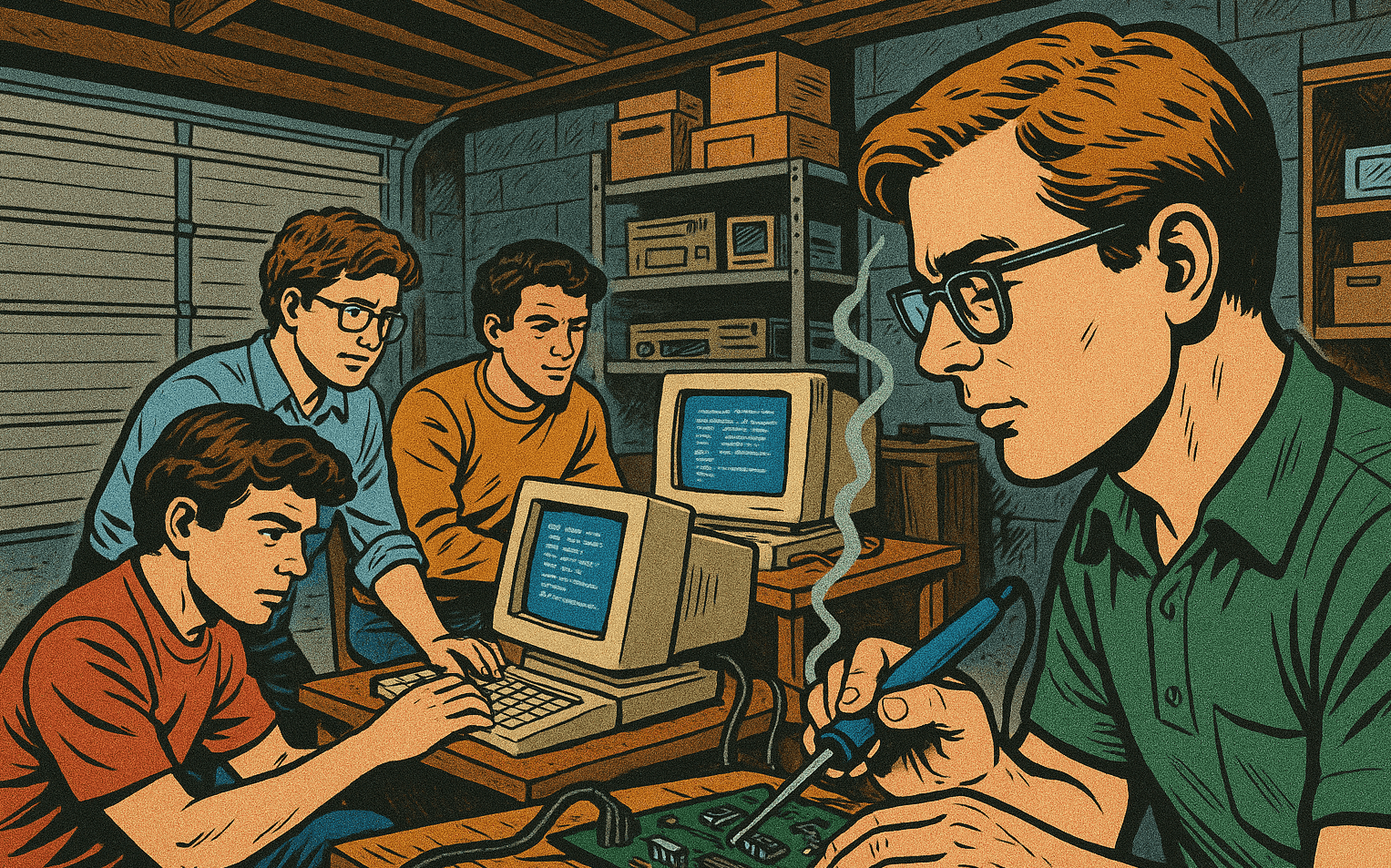
A 12-person product team at a mid-stage startup shipped 23 features in Q1 2024. By Q3, with 19 people on payroll, they shipped 11. More headcount, less output. The postmortem was brutal: seven new recurring meetings, no protected build time, a project tracker nobody updated, and a culture that rewarded "looking busy" over finishing work. They didn't have a talent problem. They had a rhythm problem.
That pattern repeats everywhere. Strategies look elegant on slide 7, then reality arrives with shifting priorities, half-written specs, calendar pollution, and a dozen apps that refuse to share data. The real differentiator between teams that consistently ship and teams that consistently plan to ship isn't intelligence or headcount. It's an execution stack that converts intent into outcomes - reliably, under pressure, without grinding people into dust.
Picture your organization as a three-layer machine. Culture is the operating system, productivity is the scheduler, and project management is the compiler and deployment pipeline. If any layer stutters, the whole system throttles. Get all three humming together and a small team starts outperforming groups three times its size.
This guide is a field manual for building that machine: how to install rituals that scale, eliminate the waste hiding in your calendar, establish a planning cadence that actually sticks, and turn "done done" into a reflex. Practical advice, dry humor, buzzwords kept on a very short leash.
The Stack - Three Layers, One Pulse
The execution stack runs top to bottom and feeds back up again:
Culture sets the rules of engagement - how your team behaves when the calendar is packed and the data is fuzzy. Without the right norms, tools get misused and plans become theater. Culture is the invisible infrastructure; when it cracks, everything built on top wobbles.
Productivity translates attention into outputs. It's the choreography of meetings, documentation, maker time, and decision speed. If attention leaks through a cracked schedule, every downstream promise is at risk. Think of productivity as bandwidth management for human brains.
Project management routes the work. Scope, estimates, dependencies, milestones, and the blunt question: "What ships by Friday?" The craft here is to create predictability without turning the team into paperwork jockeys drowning in status updates nobody reads.
Here's the kicker: you can't brute-force the lower layers if the top layer is rotten. A Jira board won't save you from a culture that punishes honesty. A time-blocking app won't rescue a team that fears saying "this estimate is wrong." Start with culture - even a few simple norms - then lock in productivity habits, then tune the project mechanics. If you want a deeper dive into the people dynamics underneath all of this, save Organizational Culture and Employee Engagement and return to it after you sketch your first set of rituals.
Culture - How Work Actually Feels (and Why That Matters to Throughput)
Culture is the unseen constraint on every sprint, every launch, every quarterly plan. A team that feels safe speaking plainly accelerates, because ambiguity gets surfaced early and quietly, before it metastasizes into a two-week delay. A team addicted to posturing pretends alignment right up to the moment the launch misses by a month. Google's Project Aristotle found that psychological safety was the single strongest predictor of high-performing teams - stronger than seniority, technical skill, or even workload balance.
The trick is translating values into operating norms that show up in the calendar and in written artifacts. "Disagree and commit" sounds great on a poster; a better translation is, "We argue in the doc, not in chat, and we decide in 30 minutes with named owners." "Customer obsession" is vague; "every project doc starts with the user scenario and a success metric" is crisp enough to enforce. "Ownership" sounds heroic; "each workstream has a DRI who writes the weekly state of the union in four sentences" actually survives contact with Monday morning.
"Disagree and commit" - Sounds inspiring. Nobody knows when or how to disagree. Decisions stall in Slack threads.
"Customer obsession" - Appears on the wall. Means different things to product, sales, and support.
"Ownership" - Everyone agrees it matters. Nobody agrees who owns what.
"Argue in the doc, decide in 30 minutes, name the owner" - Specific. Enforceable. Trackable.
"Every project doc opens with user scenario + success metric" - Crisp test anyone can apply.
"Each workstream has a DRI who posts a 4-sentence weekly update" - Accountability with minimal overhead.
Culture is also defined by what you cancel. If the norm is "we protect builder time," the default response to a midday status meeting is to nuke it and post a written update instead. If the norm is "we learn out loud," post-mortems stop being hunting trips for blame and become system upgrades with timestamps and action items.
The point isn't virtue signaling. It's throughput. An environment where people can admit risk early, ask "dumb" questions without career consequences, and say "I'm stuck" without stigma clears blockers before the cost curve spikes. That psychological safety is the cheapest capacity boost in business. No tool purchase required.
Productivity: Attention Is a Scarce Resource - Guard It Like Cash
The difference between a good week and a bad one usually comes down to how many hours survived intact. Makers - engineers, designers, writers, analysts - need multi-hour blocks of uninterrupted focus to produce anything worth shipping. Managers need information density and decision speed. Mash those two modes together in a single calendar and you get half-work across the board: code with bugs written between meetings, designs that feel rushed, decisions postponed because nobody had time to read the brief.
A few guardrails transform this equation:
Time blocking that isn't cosplay. For roles that produce artifacts, protect two daily blocks of 90 to 120 minutes with do-not-disturb defaults baked into the calendar tool, not just "suggested." For roles that unblock others, design a triage cadence: process requests at 10:00 and 15:00, not "always on." When everything is urgent, nothing is. Microsoft's research on "collaboration overload" found that the average knowledge worker toggled between apps 1,200 times per day - each switch burning 20 to 25 seconds of cognitive reload. Those seconds compound into hours of lost depth.
Meeting minimalism. Scarcity forces clarity. Cut recurring invites down to the meetings that genuinely change decisions. Replace status calls with written updates threaded to each project. Enforce a rule: if the agenda and the pre-read doc aren't attached 12 hours before the calendar slot, the meeting slips automatically. Nobody enjoys surprise theater, and the people who prepare shouldn't subsidize the people who don't.
Documentation with a spine. The fastest way to reduce meetings is to write better. A single well-structured page outperforms twenty slides if it states the problem, the constraints, the options considered, the recommendation, and the definition of "how we'll know it worked." Keep it lightweight, not literary. The real trick is deploying stable templates so the team always knows where to look for the answer - same format every time, same location every time.
Decision logs. Memory is the silent killer of momentum. Maintain a simple log: date, decision, owner, options rejected, rationale for the pick. In six weeks you won't relitigate old debates; you'll revisit a rationale and adjust it if reality pushed back. That log is also gold for onboarding new team members who would otherwise spend their first month asking "why did we choose X?"
A 2023 study by Qatalog and Cornell found that the average worker spends 59 minutes per day just searching for information trapped in different apps. That is nearly 5 hours a week - the equivalent of losing an entire team member for every 8 people on payroll. Stable documentation and decision logs slash that search tax dramatically.
For a tidy set of personal and team-level practices - review cadences, prioritization frameworks, calendar shaping techniques - the full breakdown on Productivity and Time Management covers the patterns worth lifting for your org size.
Project Management - The Router Between Ideas and Shipped Work
Project management is not Gantt fan art. It boils down to three promises: clear scope, honest sequencing, and transparent progress. Strip away the methodology wars - agile vs. waterfall vs. whatever hybrid your last consultant named after a mountain - and those three promises are all that matter.
Start with a one-page project brief. Problem, audience, non-negotiables, out-of-scope, and a working definition of "done" that two people can independently verify. Add a sketch of milestones at the grain size your team can actually see: "alpha with core flow working," "beta with analytics wired," "content complete," "legal sign-off," "GA with support playbook ready." Leave fine-grain task breakdowns to the workstream leads. Micromanaging at the portfolio level is a time sink that creates the illusion of control while eroding the reality of ownership.
Then build a dependency map that fits on a single screen. Red lines for blocking dependencies, dotted lines for "nice to have." This one artifact prevents the classic week-seven surprise: discovering that the "simple integration" requires a vendor you haven't even started onboarding. Most project delays live in the spaces between teams, not inside them. The dependency map makes those spaces visible.
Finally, decide how you check progress. A weekly ritual works beautifully: each workstream lead posts percent complete, the delta from last week, the top risk, and the planned countermeasure. Two paragraphs, not a novella. Show the work on a shared board for visibility, but treat the narrative update as the source of truth. Dashboards alone don't explain; people do. A green status bar hiding a nervous lead is worse than no bar at all.
For the expanded toolbox - estimation patterns, risk burndown techniques, stakeholder communication cadences - keep Project Management and Execution bookmarked while you implement the basics here first.
The Cadence - Yearly Vision, Quarterly Bets, Weekly Momentum, Daily Flow
Great teams stack four planning cycles and let them talk to each other. Each cycle has a different job, a different audience, and a different cadence of review. Collapse them into one and you get mush. Ignore any layer and you get drift.
Yearly sets the theme. What outcomes matter most? Which hills is the company willing to fight for? Keep this layer light. A narrative beats a spreadsheet at this altitude, because the year-level view needs to inspire direction, not prescribe tasks. Intel, Amazon, and Spotify all run annual planning as a story about where the company is headed - the specifics live in the layers below.
Quarterly turns theme into bets. Choose a handful of outcomes the business genuinely cares about and tie them to clear owners with measurable targets. Avoid bingo-card goals where every department lists 15 objectives and nobody remembers any of them by February. Pick the bets that make everything else easier or unnecessary. If a quarterly bet doesn't have a named owner and a way to tell whether it worked, it's a wish, not a bet.
Weekly is the engine room. This is where status becomes signal. A Monday planning note, a Wednesday risk check, and a Friday ship-and-readout beats a single "big weekly meeting" that everybody dreads and half the team zones out of. Keep the touchpoints short, reliable, and written. Amazon's six-page memo culture exists precisely because writing forces clarity that PowerPoint obscures.
Daily is execution texture. Block time. Write. Build. Test. Ship. Share what you've finished, not what you're "working on." There's an important distinction: "working on" is often code for "still thinking about it." "Finished" is a commitment you can stack.
Set direction with a narrative. What hills matter? Keep it at 30,000 feet.
Pick 3-5 outcomes with named owners and measurable targets. Kill the bingo card.
Monday plan, Wednesday risk check, Friday ship list. Short, written, reliable.
Block time. Build. Share what's finished, not what's "in progress."
Stack these four and you sidestep both the whiplash of last-minute panic and the drift of "we'll get to it next sprint." You also kill the calendar bloat that silently devours momentum week after week.
Communication - Fewer Words, More Signal
The purpose of communication inside a team isn't performance. It's compression of uncertainty. A powerful habit is to write for decisions. Begin every document with the question you need answered and the two or three options you've evaluated. Close with the recommended call and its consequences. That structure lets a busy executive scan the document in 90 seconds and either approve, redirect, or ask one clarifying question.
If you need a decision from a leader, request a 15-minute "decision review," not a 60-minute "deep dive." Leaders show up when the path to a decision is well-lit. They vanish when the meeting feels like exploration without a destination.
Use chat for tactical coordination, docs for thinking, and short meetings for alignment that genuinely requires a human temperature check - tone, trust, conflict resolution. That three-channel split turns "collaboration" from a fuzzy vibe into a measurable time saver. Teams that master this communication architecture - especially in hybrid environments - tend to reclaim 4 to 6 hours per person per week. That's not a guess; it's what Slack's Workforce Index found when tracking how high-performing teams segment their channels. The principles also connect directly to broader leadership and management practices, where clear communication is the single highest-rated skill in 360 reviews year after year.
Roles - Who Owns What (So Nothing Falls Through the Cracks)
In small teams, everyone wears five hats. In growing teams, those hats become excuses. "I thought you were handling that" is the most expensive sentence in any organization, and it gets spoken most often between headcount 15 and 50, right when the startup-era "we all just know" model collapses under its own weight.
Clarity is faster than consensus. You need three roles, explicitly named: a DRI (directly responsible individual) for each project, workstream leads for specialized modules, and a program owner who sees the full chessboard of dependencies. That's enough. If you feel the urge to add a committee, write down the reason. If the reason is "so nobody feels left out," you're adding drag, not governance.
The DRI runs the weekly updates, manages scope trade-offs, and escalates decisions when they're stuck. Workstream leads own their backlogs and their estimates - and they defend both. The program owner aligns cross-team dependencies, keeps the roadmap honest, and shields the builders from "drive-by priorities" that show up disguised as "quick favors." With those roles explicit and public, you'll be surprised how many conflicts vanish inside the first week. People stop guessing and start building.
Estimation - Ranges, Not Fairy Tales
The fastest way to earn credibility with stakeholders is to stop pretending you can predict the future to the day. Single-point estimates are fiction. Use ranges and shrink them as uncertainty drops. A week-one estimate of "3 to 5 weeks" that narrows to "3.5 weeks, plus or minus 2 days" by mid-project tells a far more honest story than a confident "4 weeks" that silently slips to 7.
Where genuine unknowns exist, also estimate the cost of learning. What can you prototype or test by end of week to eliminate the biggest blind spot? Now your plan funds the truth, not just the build. That prototype might take two days, but it could save two months of building the wrong thing.
Tie every estimate to acceptance criteria that a non-expert can verify. You don't need a spec worthy of a courtroom, just a checklist that lets two people independently say, "Yes, this is done." Ambiguity in the definition of "done" is where scope creep breeds, schedule surprises hatch, and teammates quietly resent each other for weeks.
The Feature Factory Problem (and the Cure)
Feature factories ship tickets with the same enthusiasm that accountants file receipts. Everything is "in progress" forever. Customers feel the churn as half-baked releases pile up. Morale erodes because nobody can point to a completed thing they're proud of. The cure is ruthless focus: shippable slices tied to real user outcomes, not internal wish lists assembled during a brainstorm nobody remembers.
A pattern that works reliably: write the user path you're touching in two paragraphs, then pick the narrowest slice that completes a journey from start to value. Refuse to kick work forward until that slice is in a user's hands, even if the cohort is small. Celebrate "boring wins" over "ambitious almosts." The scoreboard only cares about value in production, not ambition sitting in staging.
A SaaS company's product team had 47 features "in progress" across 3 squads. Average cycle time: 11 weeks. After switching to shippable slices, they cut the in-progress count to 12 and dropped average cycle time to 3.4 weeks. Customer satisfaction scores climbed 18 points in one quarter - not because they built more, but because what they shipped actually worked end to end. The backlog shrank by saying "not yet" more often, and the features that survived the filter arrived polished instead of patched.
The broader discipline behind this - connecting product decisions to strategy, sizing bets correctly, and knowing when to kill a feature before it drains more resources - ties into operations and process optimization thinking. The best product teams borrow heavily from operations principles, even if they'd never call it that.
Meetings - A Small Tax That Can Bankrupt You
Meetings are a necessary evil; the discipline is keeping them from multiplying like rabbits in spring. Default to short, scripted, and documented.
A crisp weekly project review can cover multiple workstreams in 30 to 40 minutes if everyone writes their update beforehand. Start on time. End early. Capture decisions in the shared doc and publish the link within 10 minutes of adjournment. If a topic balloons into a real debate, branch it into a separate decision review with only the three or four people who have genuine skin in the outcome. The main review is not group therapy.
Standups serve a purpose when they focus on blockers and handoffs. The moment they devolve into mechanical "yesterday I did X, today I'll do Y" recitals, replace them with a written check-in and let people get back to the work that actually matters. The goal of a standup is movement, not ceremony. If nobody's behavior changes because of the standup, the standup is dead weight.
Documentation - Your Team's External Brain
Docs are oxygen for distributed teams and institutional memory for everyone else. The cost is front-loaded; the returns compound over months and years. The principle is simple: write once, reuse many times. A solid project brief spawns the FAQ for support, the release notes for customers, the onboarding walkthrough for new hires, and the post-mortem that trains the next project lead. That's not overhead. That's infrastructure.
Keep documentation in a single, searchable home with stable URLs, version history, and obvious ownership. If someone on your team has to ask "Where's the latest version?" the system failed, and you should fix the system before adding more content to it. The worst documentation trap is having two competing versions of the same doc in two different tools - Confluence and Google Docs, Notion and SharePoint - where nobody knows which one is current.
Tooling - Fewer Apps, More Integrations
The best stack is the one your team actually uses, not the one that won the vendor bake-off. You need a source of truth for tasks, a shared space for docs, a calendar that reflects reality, and a dashboard that surfaces risk. Integrations between those four matter more than features within any one of them. If your project management tool doesn't talk to your documentation platform, you're creating a black market of screenshots and copy-paste artifacts that rot within days.
Aim for a simple rule: one place to decide, one place to see the work, one place to write. Everything else is optional until proven otherwise. Tool sprawl is the organizational equivalent of technical debt - it accrues silently and compounds until someone finally audits the monthly SaaS bill and discovers 14 overlapping subscriptions.
Remote and Hybrid - Trust, Telemetry, and Time Zones
Remote work doesn't create management problems. It exposes the ones that were always there, just hidden by the physical proximity of an office. The cure isn't surveillance software or mandatory webcams; it's clearer agreements and better telemetry.
Agree on response windows segmented by function and time zone. Publish maker blocks where nobody expects replies. Deploy async-first as the default, escalating to synchronous conversation when tone, speed, or interpersonal nuance genuinely requires it. Instrument your pipeline so leaders can see progress without interrupting the builders. That's not micromanagement; that's professional curiosity backed by data instead of check-in calls.
Onboarding is the make-or-break moment for remote teams. A new hire should ship something small in week one, complete a guided tour of the core documentation, and meet the critical people in their working orbit through structured introductions, not random Slack messages. If onboarding drifts, productivity drifts for months. The cost is invisible but enormous: one poorly onboarded engineer who takes 12 weeks to reach full speed instead of 4 represents 8 weeks of salary producing friction rather than output.
Risk and Recovery - The Calm, Boring Backbone
Every project carries risk. Healthy teams make risk visible early instead of hoping it resolves itself. Keep a risk log right next to the decision log: risk description, trigger condition, owner, countermeasure. Review it briefly during the weekly pulse. Celebrate risk sightings the same way you celebrate wins - publicly and with genuine appreciation. The more boring and routine this process becomes, the fewer "surprise, we forgot X" moments haunt your launches.
Recovery is a skill that rarely gets practiced until the crisis arrives. Draft a rollback plan for anything user-facing before you ship it. Test the rollback once when the stakes are low and the team is calm. That simple habit pays off massively: when something does break in production at 11 PM on a Thursday, the team follows a rehearsed script instead of improvising under panic. For a more comprehensive framework on building risk awareness into every layer of your operations, the deep dive on risk management and corporate governance covers the structural patterns behind these habits.
Metrics That Don't Lie
You can measure your way into paralysis, so pick a tight set that correlates with "we ship and users are happier." Vanity metrics - page views without context, story points completed without outcome tracking, "velocity" divorced from customer value - create dashboards that feel productive while hiding the truth.
Cycle time (from work started to value in a user's hands), on-time delivery by milestone, rework rate (how often shipped work bounces back), decision latency (how long big calls sit in limbo), and support tickets per release give you a crisp operational picture. Pair those numbers with one qualitative pulse: a monthly, anonymous "what blocked you this month" survey with three sliders and a comment box. That blend of quantitative and qualitative signal is enough to guide your next round of improvements without turning the team into data-entry clerks.
Tie each metric to an owner and a weekly comment. Data without ownership is trivia. A metric that nobody reviews is decoration.
The Rituals - Small Habits, Big Speed
Rituals are where culture meets productivity in public. They're the moments where norms become visible and where the team builds trust through repetition.
Monday plan in plaintext. Each DRI posts goals for the week, the top risk they're watching, and what they need from others. Two short paragraphs. No slides, no jazz hands, no 45-minute kickoff meeting. Just a written commitment that everyone can read in 90 seconds.
Wednesday risk cut. Quick scan of the risk log. Red items get countermeasures assigned. Stuck decisions get unblocked or escalated. The Wednesday check prevents the Friday surprise - that horrible moment when someone reveals a blocker they've been sitting on since Tuesday.
Friday shipped list. What hit production or crossed a meaningful internal milestone. Share praise by naming the specific work, not just the people. "The checkout redesign reduced cart abandonment by 6% this week" is more motivating than "great job, team." Quiet, steady recognition beats confetti cannons. It also builds a searchable archive of progress that's invaluable during quarterly reviews.
You'll notice how many meetings evaporate once these three rituals stick. People know what matters. They know where to look. They know how to help without being asked.
Anti-Patterns: Warnings from the Field
Three failure modes show up with depressing predictability in growing teams.
Calendar rot. When the calendar looks like Tetris on hard mode, the team ships less every passing week. Fix at the source: fewer standing meetings, stronger writing, and sacred maker blocks that leadership actively protects rather than casually violates. You don't need anyone's permission to cancel a meeting that doesn't change a decision. Try it. The sky won't fall.
Priority drift. Work expands to fill any slack in governance. Lock quarterly bets. When ad-hoc requests land - and they always land - ask which existing bet the new request dethrones. If nobody can name the trade-off, the request waits. This single question filters out more noise than any prioritization framework ever invented.
Spec theater. Teams write 20-page documents to avoid confronting three hard questions. Flip the approach: answer the hard questions first - what problem, for whom, by when, how we'll know it worked - and stop writing at two pages. If you feel compelled to write more, you're probably hiding an unresolved decision behind walls of text. Surface the decision. Make the call. Move on.
A Practical 30-Day Rollout
You can implement the full execution stack without a reorg, a consultant, or a team bonfire. Here's a path that works without drama.
Publish the Monday/Wednesday/Friday ritual. Appoint DRIs for every active project. Create the decision log and the risk log in a shared, searchable location. Don't overthink tools at this stage; a shared document works perfectly to start.
Audit and kill or shrink recurring meetings. Replace status calls with written updates. Protect maker blocks by role, and announce the new norms publicly so everyone has permission to enforce them.
Introduce the one-page project brief template and the weekly two-paragraph update format. Run the first dependency mapping session. Ask leaders to model the new behaviors visibly - if the VP writes their Monday plan, everyone else will too.
Add cycle time and rework rate to your team dashboard. Test one rollback plan. Run a short post-mortem on the rollout itself: what stuck, what flopped, what needs adjusting.
By the end of the month, you'll have fewer surprises, fewer "where is that doc?" moments, and measurably more shipped work. Momentum is a habit. You just taught the team how to build it.
Culture as a Force Multiplier
The execution stack isn't a poster. It's a simple architecture that removes drag from every layer of how a team operates.
Culture gives permission to tell the truth early, before small problems compound into expensive ones. Productivity protects the attention required to do the actual work that moves the needle. Project management aims that protected attention at specific outcomes and keeps the route transparent enough for everyone to navigate without constant hand-holding.
The takeaway: Layer these three correctly and teams stop waiting on each other, stop relitigating settled decisions, and start compounding. The rhythm becomes self-reinforcing: good cadence builds trust, trust enables speed, and speed generates the wins that make the cadence feel worth protecting. You don't need a bigger team. You need a team that moves together.